Port Infrastructures and Electricity: Where Do We Stand?
Electrifying port infrastructures is a major challenge facing ports, which are adapting, in particular, to the progressive evolution of the shipping fleet and cargo-handling equipment.
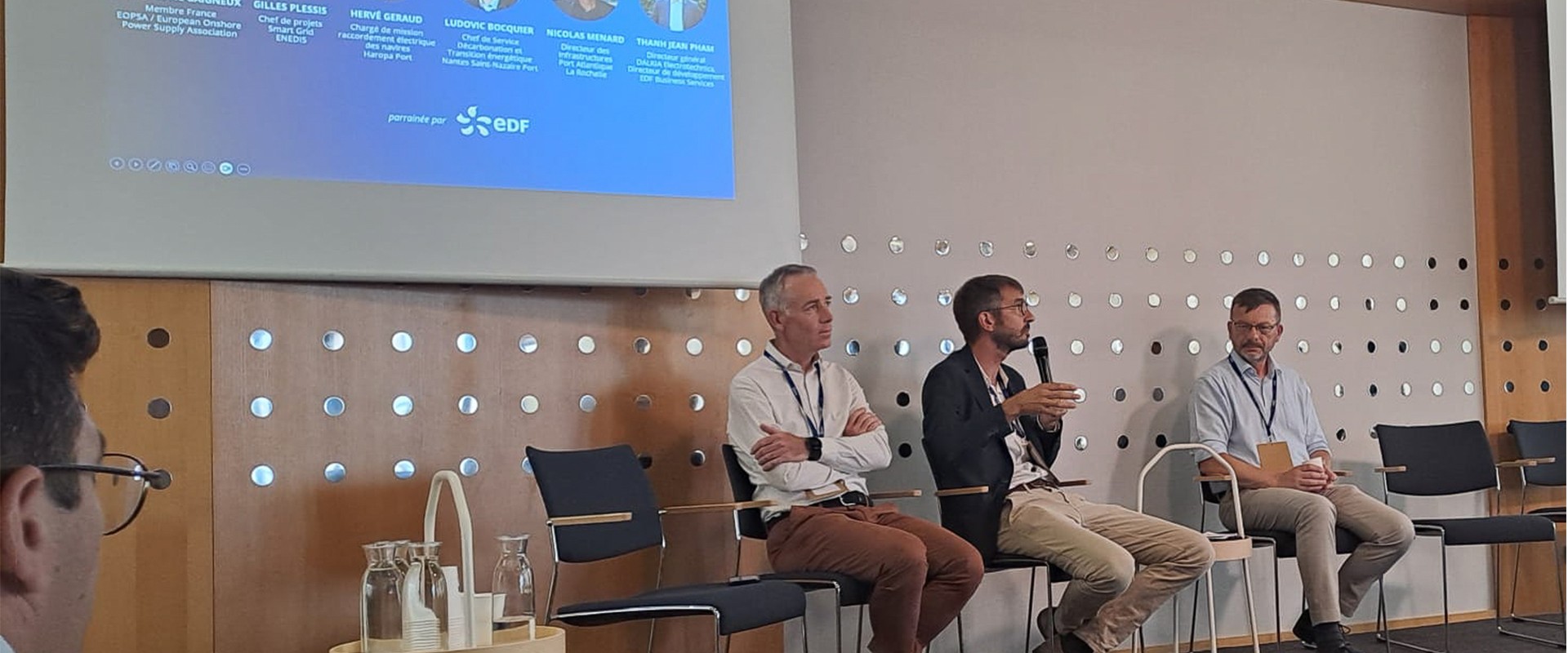
On 16th June, EDF and the ISEMAR Applied Research Centre in Maritime Economics invited players from the shipbuilding, transport and port sectors to discuss the role of electricity in decarbonizing maritime mobility at the Electricity and Maritime Forum held in Nantes.
As part of a panel discussion, Head of Decarbonization and Energy Transitions Ludovic Bocquier was invited to present the measures that have been implemented and the projects that are currently underway at Nantes ‒ Saint Nazaire Port.
This panel discussion provided an opportunity to highlight the key issues, in particular the need for network operators to plan ahead, the technical challenges within a regulatory framework that is not yet fully stable – which require cooperation and innovation – as well as the importance of the associated business model and the vital role played by existing European and national support mechanisms.
At Nantes ‒ Saint-Nazaire Port, there are already around twenty vessel connection points in place for small vessels; work is currently underway at Donges to upgrade the electrical infrastructure so as to enable the recharging of the first 100 % electric inshore piloting launch operated by Lamanage Huchet Desmars; projects to convert port-based nautical craft and equipment to hybrid power, as well as renewable energy generation and storage facilities within the port area, at Montoir de Bretagne or Cheviré.
Plans are underway to expand the electrification of the Montoir de Bretagne terminals, as a means of decarbonization that complements the development of sail-powered vessels and alternative fuels.
Contact at Nantes Saint-Nazaire Port – Ludovic Bocquier